Many are unaware of the vital role played by Chrysler Corporation in World War II. As Mopar enthusiasts, we should all be proud of its outstanding war record.
In 1939, the U.S. military was laughable. The Army's own chief of staff, Gen. George C. Marshall, ranked it 19th in the world- one spot behind Portugal- in a report to the president. Roosevelt was about to change that- and America- forever. Decades of isolation and a global depression had created a nation unresponsive to the world beyond its borders. But the battles raging in Europe and Asia were growing steadily closer.
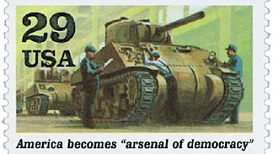
Despite serious opposition to joining another foreign war, President Franklin Roosevelt understood the magnitude of the disaster unfolding on the world stage. He stated, “We must be the great arsenal of democracy. For us, this is an emergency as serious as war itself. We must apply ourselves to our task with the same resolution, the same sense of urgency, the same spirit of patriotism and sacrifice as we would show were we at war." This planted the seeds to the most prolific and most lethal manufacturing story in the history of the world. It has never been repeated, and it likely never will be.
It is generally agreed that no American city contributed more to the Allied powers during WWII than Detroit. Because of its strength as an automobile manufacturer, Detroit was an ideal city to step up to the task set by the President. Thus, the Detroit-area’s automobile industry underwent rapid transition in order to handle the production of weapons and vehicles of war.
Although some projects started before the war, after December 7, 1941 Chrysler stopped all private automotive production within three months. Car tools were pushed to the side and covered with tarps as tool-and-die men created the implements of war. Assembly lines were reconfigured. Tens of thousands of people were hired and trained. Logistics of unimaginable proportions were penned to get Spitfire engines to England, tanks to Russia, and guns to China, all the while building up America's very real military arsenal. Blueprints were studied, shared, and often improved. During the four years of war, it amassed over $3.4 billion in U.S. governmental contracts.
Here is a brief summary of some of the significant weapons that were manufactured, in mass, by Chrysler, Dodge and Plymouth.
Tanks
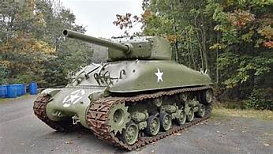
By the late summer of that same year, Chrysler received a contract with the Department of Defense for $54.5 million to construct and staff a tank-building plant. This contract, an incredible amount of money for the time, demonstrates the magnitude of governmental interest and trust in the reliability of Chrysler production, as at the time the second largest tank contract had been for $11 million dollars. The Chrysler-produced Sherman M4 tank would be the main combat vehicle of U.S. ground forces. The tank plant contracted in 1940 was operational and produced tanks in quantity by 1941. There were a total of 6,258 M3 tanks built during WWII, with Chrysler building 3,352 or 53% of the total. It built 17,947 of the M4 Sherman series tanks, or 36% of the total 49,234 built. At the end of the war Chrysler manufactured 473 T26E3/M26 and 185 T26E2/M45 tanks. It also produced 250 T23 medium tanks bringing the total of tanks built by Chrysler at the Detroit tank arsenal to 22,207.
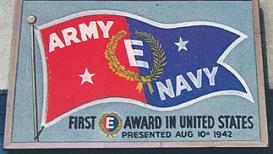
Chrysler Tank Arsenal in Warren, MI received the Army-Navy "E" Award on August 10, 1942. It was the first of its kind to be awarded after the Navy and Army combined their individual awards into one. The plant added a star in February of 1943. Thirteen Chrysler Plants won a total of 37 "E" awards during WWII. Chrysler also voluntarily gave up all profits from the development and production of the M3, M4 and Pershing tanks.
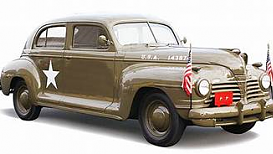
Ambulances, Trucks and Staff Cars
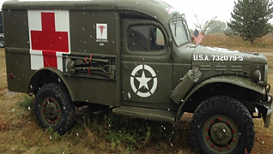
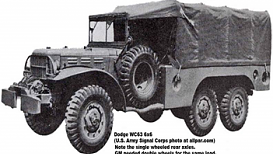
Dodge and Plymouth produced ambulances, staff cars and trucks. By the end of the war, Dodge had produced approximately 500,000 4X2 and 4X4 military trucks.
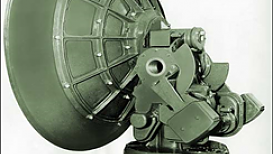
SCR584 Radar-Guided Anti-Aircraft Guns
Delivered at 20% of the Army’s (and GE’s) estimated cost, in one trailer instead of seven, these radar-guided guns saved many soldiers’ lives and, in one day, knocked down over 96% of the German rockets attacking London.
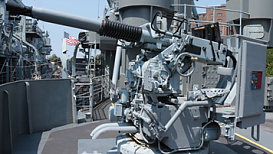
Bofors Anti-Aircraft Guns
Chrysler had been tasked with building the Swedish Bofors 40mm anti-aircraft guns. These superb naval and army guns initially took 450 man-hours to build. By the end of the war, Chrysler cut that time to an incredible 10 man-hours.
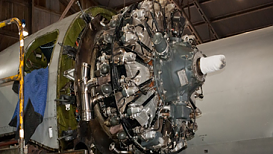
B-29 Superfortress Bomber
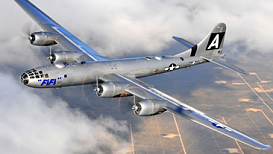
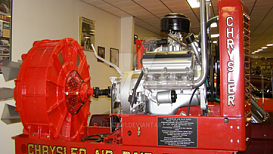
One of Chrysler’s greatest WWII achievements was the redesign and production of the engines to the revolutionary Boeing B-29 bomber, which brought the war to the Japanese homeland. The assemblage rate of B-29 bomber engines at Dodge-Chicago exceeded the target amount by at least a hundred per month, while at the same time, cutting their manufacturing cost by half. By the end of the war, Dodge had produced 18,413 Wright Cyclone engines.
View attachment 6176
Comprehensive List of all Products/Weapons Manufactured by Chrysler
Manhattan Project U-235 Separation Equipment- (406) X-100 Type 1, (1,942) X-100 Type 2, (1,418) X-100 Type 3 and (826) X-100 Type 4. These pieces of equipment took 100 railcars to ship from Detroit to Oak Ridge, TN.
Aviation- (300) A-20 Bomb Chute Assemblies, (364,871) Bomb Shackles, (568) B-29 Bomber Noses, (559) B-29 Wing Leading Edges, (4,752) B-29 Bomber Cowling Sets, (1,586) B-26 Nose and Center Fuselage Sections, (4,100) Douglas B-17 Cockpit Enclosures, (18,413) R-3350 Radial Aircraft Engines for the B-29, (688) Flight Station Cockpits for the Lockheed PV-2 Harpoon, (10,202) Landing Gear and Arresting Gear Sets for Chance Vought F4U Corsair, (907) Nose Cap Assemblies, (2,982) Propeller Balancing Stands, (163,290) Ski Pedestals and (5,669) Wing Center Sections for Curtiss SB2C.
Vehicles- (12,214) Partial Engine Assemblies, (9,965) Multi-Bank M4 Tank Engines, (2,100) 2- Speed Gear Boxes, (2,056) Grouser Kits, (22,207) Tanks, (3,272) Modified Tanks, (3,694) Modified Trucks, (1,542) 1/2 Ton 4x2 Trucks, (6,216) 1&1/2 Ton 4x2 Trucks, (72,286) 1/2 Ton 4x4 Trucks, (255,193) 3/4 Ton 4x4 Trucks, (43,278) 1&1/2 Ton 6x6 Trucks, (15,000) 3 Ton Trucks- China and (20,404) Fire Apparatus (This assumes these are fire trucks).
Ammunition and Shot- (485,463,000) .30 carbine rounds of ammunition, (222,000,000) .50 Cores, (2,768,688,000) .45 rounds of ammunition, (3,000,000) 20mm Practice Shells, (19,933,000) 20mm Practice Balls, 671,446) 3-Inch Shell Forgings and (1,989,801) 20mm Armor Piercing Shot.
Sperry Shipboard Gyro-Compasses- Dodge built 5,500 of these units which consisted of the main gyro that was installed down in the bottom of the ship. This unit supplied the compass reading to several repeater units throughout the ship. These would be in such places as the captain's quarters and the bridge. These were all very sophisticated and complex precision units consisting of 10,000 parts. Dodge developed the mass production methods needed to manufacture these in the large quantities needed. This took 5,000 tools, jigs and fixtures to which were all designed by Dodge engineers. It took between 11 and 16 large wooden crates to ship these build units to the shipyards for installation.
Pilot tanks- The Chrysler Engineering Department built 38 different pilot tanks, including the T92 and T-93.
Other- (14,370) Air conditioning and refrigeration units, (238,109,000) Bearings, (30,095) Single 40mm air cooled Bofors Gun Mechanisms for the US Army, (51,684) Single 40mm air cooled Bofors Gun Tubes for the US Army, (14,442) Dual 40mm water cooled Bofors Guns for the US Navy, (101,232) E48 Incendiary Bombs, (119,814) Industrial Engines, (21,131) Marine Engines, (62,192) Field Kitchen Cabinets, (233,118) Field Kitchens, (17,200) Gas and Oil Fired Furnaces, (29,589) Domestic and Export Water Heaters, (1,994) Anti-Submarine Nets, (156,585) 20mm Oerlikon Gun Magazine Lever Assemblies, (9,002) Pontoons, (2,228) Marine Tractors, (328,367) 4.5 Inch Rockets, (1,550) Searchlight Reflectors, (253) Smoke Screens, (37,932) Cook Stoves, (2,098) SCR-584 Anti-Aircraft Radar Antenna Mounts and Parabolic Antennas, (352) Air Raid Sirens and (8,307,540) Aluminum Forgings.
In 1939, the U.S. military was laughable. The Army's own chief of staff, Gen. George C. Marshall, ranked it 19th in the world- one spot behind Portugal- in a report to the president. Roosevelt was about to change that- and America- forever. Decades of isolation and a global depression had created a nation unresponsive to the world beyond its borders. But the battles raging in Europe and Asia were growing steadily closer.
Despite serious opposition to joining another foreign war, President Franklin Roosevelt understood the magnitude of the disaster unfolding on the world stage. He stated, “We must be the great arsenal of democracy. For us, this is an emergency as serious as war itself. We must apply ourselves to our task with the same resolution, the same sense of urgency, the same spirit of patriotism and sacrifice as we would show were we at war." This planted the seeds to the most prolific and most lethal manufacturing story in the history of the world. It has never been repeated, and it likely never will be.
It is generally agreed that no American city contributed more to the Allied powers during WWII than Detroit. Because of its strength as an automobile manufacturer, Detroit was an ideal city to step up to the task set by the President. Thus, the Detroit-area’s automobile industry underwent rapid transition in order to handle the production of weapons and vehicles of war.
Although some projects started before the war, after December 7, 1941 Chrysler stopped all private automotive production within three months. Car tools were pushed to the side and covered with tarps as tool-and-die men created the implements of war. Assembly lines were reconfigured. Tens of thousands of people were hired and trained. Logistics of unimaginable proportions were penned to get Spitfire engines to England, tanks to Russia, and guns to China, all the while building up America's very real military arsenal. Blueprints were studied, shared, and often improved. During the four years of war, it amassed over $3.4 billion in U.S. governmental contracts.
Here is a brief summary of some of the significant weapons that were manufactured, in mass, by Chrysler, Dodge and Plymouth.
Tanks
By the late summer of that same year, Chrysler received a contract with the Department of Defense for $54.5 million to construct and staff a tank-building plant. This contract, an incredible amount of money for the time, demonstrates the magnitude of governmental interest and trust in the reliability of Chrysler production, as at the time the second largest tank contract had been for $11 million dollars. The Chrysler-produced Sherman M4 tank would be the main combat vehicle of U.S. ground forces. The tank plant contracted in 1940 was operational and produced tanks in quantity by 1941. There were a total of 6,258 M3 tanks built during WWII, with Chrysler building 3,352 or 53% of the total. It built 17,947 of the M4 Sherman series tanks, or 36% of the total 49,234 built. At the end of the war Chrysler manufactured 473 T26E3/M26 and 185 T26E2/M45 tanks. It also produced 250 T23 medium tanks bringing the total of tanks built by Chrysler at the Detroit tank arsenal to 22,207.
Chrysler Tank Arsenal in Warren, MI received the Army-Navy "E" Award on August 10, 1942. It was the first of its kind to be awarded after the Navy and Army combined their individual awards into one. The plant added a star in February of 1943. Thirteen Chrysler Plants won a total of 37 "E" awards during WWII. Chrysler also voluntarily gave up all profits from the development and production of the M3, M4 and Pershing tanks.
Ambulances, Trucks and Staff Cars
Dodge and Plymouth produced ambulances, staff cars and trucks. By the end of the war, Dodge had produced approximately 500,000 4X2 and 4X4 military trucks.
SCR584 Radar-Guided Anti-Aircraft Guns
Delivered at 20% of the Army’s (and GE’s) estimated cost, in one trailer instead of seven, these radar-guided guns saved many soldiers’ lives and, in one day, knocked down over 96% of the German rockets attacking London.
Bofors Anti-Aircraft Guns
Chrysler had been tasked with building the Swedish Bofors 40mm anti-aircraft guns. These superb naval and army guns initially took 450 man-hours to build. By the end of the war, Chrysler cut that time to an incredible 10 man-hours.
B-29 Superfortress Bomber
One of Chrysler’s greatest WWII achievements was the redesign and production of the engines to the revolutionary Boeing B-29 bomber, which brought the war to the Japanese homeland. The assemblage rate of B-29 bomber engines at Dodge-Chicago exceeded the target amount by at least a hundred per month, while at the same time, cutting their manufacturing cost by half. By the end of the war, Dodge had produced 18,413 Wright Cyclone engines.
View attachment 6176
Comprehensive List of all Products/Weapons Manufactured by Chrysler
Manhattan Project U-235 Separation Equipment- (406) X-100 Type 1, (1,942) X-100 Type 2, (1,418) X-100 Type 3 and (826) X-100 Type 4. These pieces of equipment took 100 railcars to ship from Detroit to Oak Ridge, TN.
Aviation- (300) A-20 Bomb Chute Assemblies, (364,871) Bomb Shackles, (568) B-29 Bomber Noses, (559) B-29 Wing Leading Edges, (4,752) B-29 Bomber Cowling Sets, (1,586) B-26 Nose and Center Fuselage Sections, (4,100) Douglas B-17 Cockpit Enclosures, (18,413) R-3350 Radial Aircraft Engines for the B-29, (688) Flight Station Cockpits for the Lockheed PV-2 Harpoon, (10,202) Landing Gear and Arresting Gear Sets for Chance Vought F4U Corsair, (907) Nose Cap Assemblies, (2,982) Propeller Balancing Stands, (163,290) Ski Pedestals and (5,669) Wing Center Sections for Curtiss SB2C.
Vehicles- (12,214) Partial Engine Assemblies, (9,965) Multi-Bank M4 Tank Engines, (2,100) 2- Speed Gear Boxes, (2,056) Grouser Kits, (22,207) Tanks, (3,272) Modified Tanks, (3,694) Modified Trucks, (1,542) 1/2 Ton 4x2 Trucks, (6,216) 1&1/2 Ton 4x2 Trucks, (72,286) 1/2 Ton 4x4 Trucks, (255,193) 3/4 Ton 4x4 Trucks, (43,278) 1&1/2 Ton 6x6 Trucks, (15,000) 3 Ton Trucks- China and (20,404) Fire Apparatus (This assumes these are fire trucks).
Ammunition and Shot- (485,463,000) .30 carbine rounds of ammunition, (222,000,000) .50 Cores, (2,768,688,000) .45 rounds of ammunition, (3,000,000) 20mm Practice Shells, (19,933,000) 20mm Practice Balls, 671,446) 3-Inch Shell Forgings and (1,989,801) 20mm Armor Piercing Shot.
Sperry Shipboard Gyro-Compasses- Dodge built 5,500 of these units which consisted of the main gyro that was installed down in the bottom of the ship. This unit supplied the compass reading to several repeater units throughout the ship. These would be in such places as the captain's quarters and the bridge. These were all very sophisticated and complex precision units consisting of 10,000 parts. Dodge developed the mass production methods needed to manufacture these in the large quantities needed. This took 5,000 tools, jigs and fixtures to which were all designed by Dodge engineers. It took between 11 and 16 large wooden crates to ship these build units to the shipyards for installation.
Pilot tanks- The Chrysler Engineering Department built 38 different pilot tanks, including the T92 and T-93.
Other- (14,370) Air conditioning and refrigeration units, (238,109,000) Bearings, (30,095) Single 40mm air cooled Bofors Gun Mechanisms for the US Army, (51,684) Single 40mm air cooled Bofors Gun Tubes for the US Army, (14,442) Dual 40mm water cooled Bofors Guns for the US Navy, (101,232) E48 Incendiary Bombs, (119,814) Industrial Engines, (21,131) Marine Engines, (62,192) Field Kitchen Cabinets, (233,118) Field Kitchens, (17,200) Gas and Oil Fired Furnaces, (29,589) Domestic and Export Water Heaters, (1,994) Anti-Submarine Nets, (156,585) 20mm Oerlikon Gun Magazine Lever Assemblies, (9,002) Pontoons, (2,228) Marine Tractors, (328,367) 4.5 Inch Rockets, (1,550) Searchlight Reflectors, (253) Smoke Screens, (37,932) Cook Stoves, (2,098) SCR-584 Anti-Aircraft Radar Antenna Mounts and Parabolic Antennas, (352) Air Raid Sirens and (8,307,540) Aluminum Forgings.