
Carbon Fiber is a polymer and is sometimes known as graphite fiber. It is a very strong material that is also very lightweight. Although carbon fiber is five times stronger and twice as stiff as steel, it is lighter than steel; making it the ideal manufacturing material for many parts. These are just a few reasons why carbon fiber is favored by engineers and designers for manufacturing.
Carbon fiber dates back to 1879, when Thomas Edison baked cotton threads or bamboo silvers at high temperatures, which carbonized them into an all-carbon fiber filament. By 1958, high-performance carbon fibers were invented just outside of Cleveland, Ohio. Although they were inefficient, these fibers contained around 20% carbon and had low strength and stiffness properties. In 1963, a new manufacturing process was developed at a British research center, where carbon fiber’s strength potential was realized.
Carbon fiber is made from a process that is part chemical and part mechanical. It starts by drawing long strands of fibers and then heating them to a very high temperature without allowing contact to oxygen to prevent the fibers from burning. This is when the carbonization takes place, which is when the atoms inside of the fibers vibrate violently, expelling most of the non-carbon atoms. This leaves a fiber composed of long, tightly inter-locked chains of carbon atoms with only a few non-carbon atoms remaining. Typical sequences used to form carbon fibers from polyacrylonitrile involves spinning, stabilizing, carbonizing, treating the surface and sizing.
The thin, strong crystalline filaments of carbon are used to strengthen material. Carbon fiber can be thinner than a strand of human hair and gets its strength when twisted together like yarn. Then it can be woven together to form cloth and if needed to take a permanent shape, carbon fiber can be laid over a mold and coated in resin or plastic.
On top of being strong, carbon fiber is:
● High in stiffness
● High in tensile strength
● A low weight-to-strength ratio material
● High in chemical resistance
● Temperature tolerant to excessive heat
● A low thermal expansion material
Because of these properties, carbon fiber is very popular for automotive, aerospace, military and recreational applications.
According to an article at energy.gov, carbon fiber composites could reduce passenger car weight by 50%, which would improve fuel efficiency by nearly 35% without compromising the performance of the car or the safety of its passengers. The first carbon fiber body shell was the 1996 McClaren F1. Nine years later, on November 3, 2005, Metalcrafters completed the main assembly of the 4,160 lb. carbon-fiber Challenger Concept for its world debut at Detroit Auto Show. (Note- The black hood stripes were clear-coated carbon fiber).

1996 McClaren F1
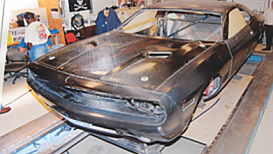
2006 Challenger Concept

Speedkore Carbon Fiber Demon Body
Almost anything can be made of carbon fiber. CFRPs are extensively used in high-end automobile racing. The high cost of carbon fiber is mitigated by the material's unsurpassed strength-to-weight ratio, and low weight is essential for high-performance automobile racing. Race-car manufacturers have also developed methods to give carbon fiber pieces strength in a certain direction, making it strong in a load-bearing direction, but weak in directions where little or no load would be placed on the member. Conversely, manufacturers developed omnidirectional carbon fiber weaves that apply strength in all directions. This type of carbon fiber assembly is most widely used in the "safety cell" monocoque chassis assembly of high-performance race-cars.
As far back as 1971, the Citroen SM offered optional lightweight carbon fiber wheels.
A cool option on the upcoming 2020 Shelby Mustang GT500 is the Carbon Fiber Track Package. It includes carbon fiber wheels (a 60-lb. savings over standard aluminum wheels), an adjustable carbon fiber wing (identical to the GT4 race car) and front dive planes (see below).
Use of this versatile material has been more readily available from the factory on high performance models, as well as from specialty manufacturers to customize street cars and improve their performance. You can now buy almost any exterior, interior or engine bay part, from wheels and spoilers to shift plates and cold air intakes. In addition, even racing helmets use this super strong and versatile material. The following are some photos of the vast selection that is available.
Exterior
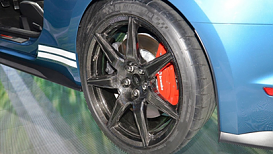
Wheels (2020 Shelby GT500)
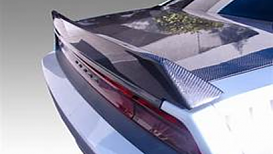
Rear Spoiler
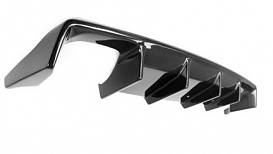
Rear Diffuser
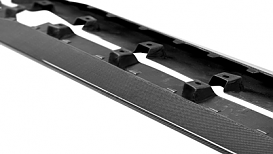
Rocker Panels
Interior

Steering Wheel
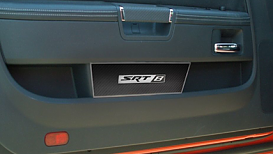
Door Panel Insert

Switch Panel

Gear Shift Knob
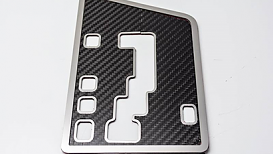
Shift Plate
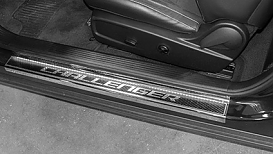
Sill Plate
Engine Bay

Wiring Covers

Engine Cover

Cold Air Intake

Core Support Filler Panel
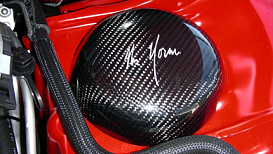
Strut Covers

Fuse Box Cover
Racing Helmets

Carbon fiber dates back to 1879, when Thomas Edison baked cotton threads or bamboo silvers at high temperatures, which carbonized them into an all-carbon fiber filament. By 1958, high-performance carbon fibers were invented just outside of Cleveland, Ohio. Although they were inefficient, these fibers contained around 20% carbon and had low strength and stiffness properties. In 1963, a new manufacturing process was developed at a British research center, where carbon fiber’s strength potential was realized.
Carbon fiber is made from a process that is part chemical and part mechanical. It starts by drawing long strands of fibers and then heating them to a very high temperature without allowing contact to oxygen to prevent the fibers from burning. This is when the carbonization takes place, which is when the atoms inside of the fibers vibrate violently, expelling most of the non-carbon atoms. This leaves a fiber composed of long, tightly inter-locked chains of carbon atoms with only a few non-carbon atoms remaining. Typical sequences used to form carbon fibers from polyacrylonitrile involves spinning, stabilizing, carbonizing, treating the surface and sizing.
The thin, strong crystalline filaments of carbon are used to strengthen material. Carbon fiber can be thinner than a strand of human hair and gets its strength when twisted together like yarn. Then it can be woven together to form cloth and if needed to take a permanent shape, carbon fiber can be laid over a mold and coated in resin or plastic.
On top of being strong, carbon fiber is:
● High in stiffness
● High in tensile strength
● A low weight-to-strength ratio material
● High in chemical resistance
● Temperature tolerant to excessive heat
● A low thermal expansion material
Because of these properties, carbon fiber is very popular for automotive, aerospace, military and recreational applications.
According to an article at energy.gov, carbon fiber composites could reduce passenger car weight by 50%, which would improve fuel efficiency by nearly 35% without compromising the performance of the car or the safety of its passengers. The first carbon fiber body shell was the 1996 McClaren F1. Nine years later, on November 3, 2005, Metalcrafters completed the main assembly of the 4,160 lb. carbon-fiber Challenger Concept for its world debut at Detroit Auto Show. (Note- The black hood stripes were clear-coated carbon fiber).
1996 McClaren F1
2006 Challenger Concept
Speedkore Carbon Fiber Demon Body
Almost anything can be made of carbon fiber. CFRPs are extensively used in high-end automobile racing. The high cost of carbon fiber is mitigated by the material's unsurpassed strength-to-weight ratio, and low weight is essential for high-performance automobile racing. Race-car manufacturers have also developed methods to give carbon fiber pieces strength in a certain direction, making it strong in a load-bearing direction, but weak in directions where little or no load would be placed on the member. Conversely, manufacturers developed omnidirectional carbon fiber weaves that apply strength in all directions. This type of carbon fiber assembly is most widely used in the "safety cell" monocoque chassis assembly of high-performance race-cars.
As far back as 1971, the Citroen SM offered optional lightweight carbon fiber wheels.
A cool option on the upcoming 2020 Shelby Mustang GT500 is the Carbon Fiber Track Package. It includes carbon fiber wheels (a 60-lb. savings over standard aluminum wheels), an adjustable carbon fiber wing (identical to the GT4 race car) and front dive planes (see below).
Use of this versatile material has been more readily available from the factory on high performance models, as well as from specialty manufacturers to customize street cars and improve their performance. You can now buy almost any exterior, interior or engine bay part, from wheels and spoilers to shift plates and cold air intakes. In addition, even racing helmets use this super strong and versatile material. The following are some photos of the vast selection that is available.
Exterior
Wheels (2020 Shelby GT500)
Rear Spoiler
Rear Diffuser
Rocker Panels
Interior
Steering Wheel
Door Panel Insert
Switch Panel
Gear Shift Knob
Shift Plate
Sill Plate
Engine Bay
Wiring Covers
Engine Cover
Cold Air Intake
Core Support Filler Panel
Strut Covers
Fuse Box Cover
Racing Helmets


