Challenger Maintenance

Jumping a Battery
Remember the days when you didn't have to think about what to do next if your car battery died? You just pulled out your trusty jumper cables and took care of it. Things aren't quite that simple anymore with modern cars. Nowadays, vehicles have a lot of complex electronics, not just in the dash, but under the hood as well. These electronics can be damaged in a jump start between two cars. There's also the placement of the battery and whether you should even use it in a jump start. Many car companies have moved the battery away from the engine bay, like in the Challenger. This is to reduce weight over the front end of the car and to keep the battery cooler to prolong its life. So, you have to use remote terminal posts instead of the...
Wheel Speed Sensors
Some people call it a wheel speed sensor, while others call it the anti-lock brake (ABS) sensor. They're both right, since the wheel speed sensor mainly feeds data to the ABS module to prevent the wheels from locking when braking. It also sends wheel speed data to the vehicle ECU and traction control system. Those systems need to know how fast the wheels are spinning to monitor braking, inform the driver of the vehicle speed, and for the traction control to work and stop you from crashing. With all those functions in mind, a faulty wheel speed sensor can manifest in many ways. The most prevalent symptoms include an illuminated ABS warning light on the instrument cluster, which also can also mean that the ABS has stopped working. At...
Difference between Tapered and Gasket Seat Spark Plugs
Understanding spark plugs goes beyond selecting the plug type, comparing platinum and iridium varieties, and considering their heat ranges. Combustion produces enormous heat, and the temperature in the combustion chamber of a running engine can reach 1,500 to 3,000°F. The plugs conduct some of the heat away from the electrodes to the insulator and metal shell. The latter has threads that screw into the cylinder head, with the heat dissipating further into the circulating coolant inside the water channels. With that in mind, it's vital that the metal shell makes a near-perfect seal to the cylinder head. Also, the plug seals the combustion chamber against leaks. It does so by having a tapered or gasket seat. Spark plugs with a flat or...
Why Tire Sidewalls Turn Brown and How to Prevent It
Tire sidewalls turn brown because of a reaction called tire blooming. This occurs when antiozonant chemicals in the tire’s rubber react with oxygen and UV light. While this process is natural, it can be unsightly. In this article, we’ll explore “why tire sidewalls turn brown and how to prevent it” effectively, sharing tips and insights on this common issue. Understanding Tire Blooming Tire blooming is a chemical reaction that results in the brown discoloration of your tires’ sidewalls. Oils and other substances released from the tire cause this discoloration. This phenomenon occurs due to the antiozonant compounds in the rubber, which are designed to protect the tire from the damaging effects of ozone and UV rays. If you’ve...
Machine Polishing and Paint Thickness
There is a lot of info out there about how to use machines for polishing. A quick YouTube search and you'll have hundreds of videos from amateurs and professionals outlining the process of removing clear coat scratches and swirl marks with any number of tools. The one thing few, if any of these videos addresses are the concerns that come after you've learned how to fix the paint. A casual reading in any forums detailing section reveals how little most people actually know about the limitations of polishing, how much material is removed with each correction, and feasibly how many times you could correct a paint job in a car's life. I've been shocked to read some people even claiming extreme things like polishing can only be done once or...
Car Batteries
Almost all of today’s car batteries are "maintenance-free." However, your battery should be load-tested annually once it is 2 years old if you live in a warmer climate, or 4 years old if you live in a colder climate. Doing so tests its ability to hold voltage while being used, and the results will let you know when it’s time to start shopping. In addition, it is a good practice to check the terminals to ensure that the connectors are tight and free from corrosion. Car batteries typically last from three to five years, according to AAA, spanning from 58 months or more in the farthest northern regions of the U.S., down to less than 41 months in the most southern regions. The battery’s age is also a strong indicator that it’s time to...
Timing
In older automobile ignition systems, the high-voltage pulses are produced by means of breaker points controlled by a revolving distributor cam. When the points are in contact they complete an electrical circuit through the primary winding of the ignition coil. When the points are separated by the cam, the primary circuit is broken, which creates a high-voltage surge in the secondary windings of the induction coil. Breaker points have been largely replaced by electronic devices in newer cars. Most now use a magnetic device, called a reductor, that is operated by the distributor shaft to produce timed electric signals, which are amplified and used to control the current to the induction coil. These newer ignition systems are more...
Proper Tire Pressure in Cold Weather
It’s known that when the temperature decreases by 10 degrees, tire pressure drops between 1 and 2 pounds per square inch (PSI). It happens not because the air escapes from the tire but because the air inside the tire starts condensing as the temperature decreases, and then it takes up less space. This is how the tire becomes under-inflated. This problem is seen mostly in the winter mornings because the car is parked all night and the air condenses. When the tires are properly inflated, and the car is in motion, this problem isn’t seen because the motion causes the tires to heat up, increasing the tire’s pressure. Now it doesn’t mean that if your car tires are under-inflated, you should start driving to heat up the tires to increase...
Paintless Dent Repair
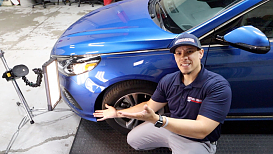
Paintless Dent Repair (PDR) is an environmentally friendly repair method that restores a vehicle’s body to factory-like condition in a fraction of the time at a fraction of the cost. PDR can be used to remove dings and dents from vehicles, as well as creases and hail damage, as long as the paint is not chipped or cracked. Overall, PDR is an excellent alternative to traditional repairs. Each day, PDR technicians across the country safely restore vehicles to their original factory condition without compromising a vehicle’s original painted finish, or a consumer’s wallet. The process generally involves four steps, including an evaluation of the damage, gaining entry to the damage, taking a closer look at the damage and, finally...
My 2013 dodge challenger sxt was sitting in my barn for a month or 2 while I waited for a coolant line to arrive. well while the car was sitting a mouse ended up crawling into it and dying. Anyways I ended up getting the coolant hose and putting it on. drove to work no problem which is 35 miles away. Then I pick up my girlfriend and while leaving I got on it and it would not shift into second gear. I pulled into a parking lot and turned around got back on the road and it drove fine. drove down the road 3 miles and on the way back it wouldn't shift unless I let off the throttle, it did this about 3-4 times. Then I went to pull into her subdivision and my car was overheating out of no were. I pulled over turned it off and checked under...
Does Motor Oil Expire?
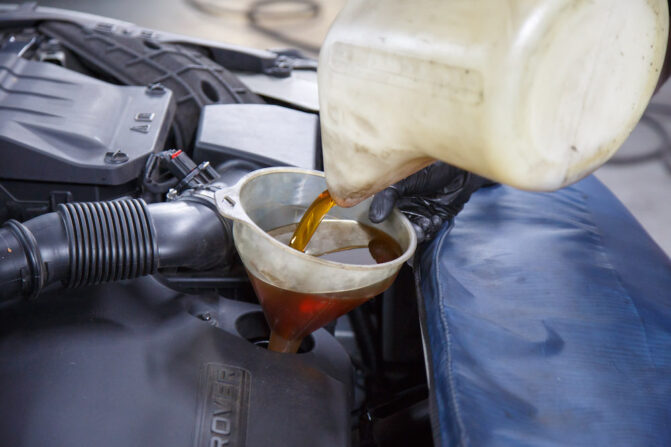
If you change your own oil, the chances are you’ve got some old engine oil on your shelf. Likely it’s nothing more than an opened 1-liter top-up bottle, or an unused 4-liter bottle. You then wonder, "Does motor oil expire?" WHAT DO THE OIL COMPANIES SAY? There is a general consensus of terminology coming from the oil companies that unused, unopened, and stored in its original container out of extremes of temperature, motor oil will last for an “extended period”. They then go on to suggest that the oil shouldn’t be used after a few years; the exact period varying between 2 years (according to Total) up to 5 years (Mobil). So while motor oil manufacturers say we should responsibly dispose of oil after a few years they all stop short...
My take on the Challenger Rust issue
Here is my take on the Challenger Rust issue. I have read lots of replies on this subject and a few things I want to share. First, I agree with one writer that us Challenger owners did not buy the car “just as transportation”, we bought because we say a bit of the excitement lost in most of todays cars. We invested our passion for a vehicle that does more that get from A to B. So, when after a few years we find a major design flaw that we have no control over it hurts. Secondly, I have come to the conclusion that if the spray foam used to fill the cavity in the rear quarter panels had a mesh stop, so that the foam did not go ALL the way down to the rocker panel and thus block the weep holes to allow moisture to expel the panel...

Oil

Can anyone tell me where i can get the pennzoil ultra ow40 oil very hard to find in Canada,Chrysler changed from Mobil to Pennzoil,would like to do my own oil change when putting away for winter
Threadlocker Adhesives
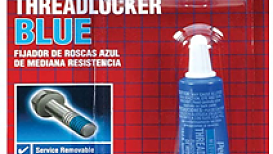
Threadlockers, as the name suggests, are used to lock the threads of fasteners such as screws, bolts, studs of different sizes which are used in different applications- especially automotive. This type of adhesive prevents loosening caused by vibration, mechanical and thermal shock. Chemically speaking, most thread-locking formulas are methacrylate-based and rely on the electro-chemical activity of a metal substrate to cause polymerization of the fluid. Thread-locking fluid has unique properties. It becomes fluid when shaken or stirred and returns to a gel state when allowed to stand. It flows in the presence of air, but when you spread it onto the threads of a fastener and tighten down, oxygen can't get to it. The threadlocker...
Maintaining Correct Tire Pressure
Maintaining tire pressure may seem like a low priority, but keeping the correct air pressure in your tires is an important part of vehicle maintenance. It helps in the following areas: · Safety · Optimizing tire performance · Improving fuel economy · Improving handling and performance while driving · Extending treadwear · Maintaining steering response · Improving cornering ability and stability · Improving steering precision Your tires are properly inflated when they match the pounds per square inch (PSI) listed on your vehicle’s tire placard on your door jam or owner’s manual. They should list appropriate PSI ranges for both the front and rear tires, as they may be different from one another. Many passenger cars need to run...
Nitrogen in Tires- Pros & Cons
Has it ever occurred to you to fill your tires with anything other than air? Because nitrogen is more stable than oxygen, it is commonly used in vehicles that require precise tuning, such as race cars, industrial machinery, aircraft, and spacecraft. That makes some drivers think that nitrogen is a better choice for their daily driver and there could be some truth to that. However, whether or not that’s true for your car depends on a number of factors. Consider that the air we breathe is 78% nitrogen, and a nitrogen-filled tire is about 93 to 95% nitrogen. In other words, the difference between a regular tire and one filled with nitrogen is minimal. How much can that nitrogen work for you? Let’s look at the pros and cons of using...
What is Octane?
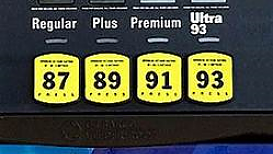
When you pull into a gas station, you usually presented with four options: regular, plus, premium and ultra premium. But, have you ever wondered what those numbers- 87, 89, 91 and 93 mean? Octane is the measure of how much compression a fuel can withstand before igniting. The higher the octane rating, the less likely the fuel is going to pre-ignite (i.e., explode unexpectedly) at higher pressures and damage your engine. That’s why performance cars with higher compression engines require higher octane premium fuel. In essence, higher octane fuels are compatible with higher compression engines that can increase efficiency and performance while potentially reducing emissions by combusting the fuel more completely. As mentioned above...
Prevent Tire Flat-Spotting
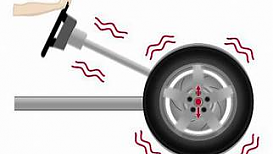
It’s not uncommon for some of us to leave our cars parked for long stretches of time- sometimes spanning days, weeks or even months. If you’re one of these car owners, you may notice a slight ride disturbance or vibration the first time you drive your car, but it will usually disappear after a few miles of driving. This phenomenon is known as flat-spotting. Flat-spotting occurs when the weight of a car presses down on the same section of an immobile tire for long enough, and under the right conditions, to change the tire's circumference from circular to less circular. It's more of a problem in cold weather, when rubber gets less pliable, and it's more likely to affect low-profile tires, and those with high-performance...
Pistons
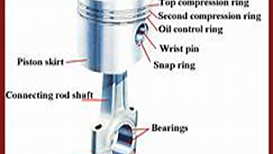
Pistons are one of the hardest working components of an internal combustion engine, where temperatures inside cylinders can reach over 1,800 degrees F. Early pistons were of cast iron, but there were obvious benefits for engine balancing if a lighter alloy could be used. To produce pistons that could survive engine combustion temperatures, it was necessary to develop new alloys such as Y alloy and hiduminium (high-strength aluminum alloy), specifically for use as pistons. A few early gas engines had double-acting cylinders, but otherwise effectively all internal combustion engine pistons are single-acting. In general, a piston is a lubricated sliding shaft that is contained by a cylinder and is made gas-tight by piston rings. Its...
Types of Brake Rotors
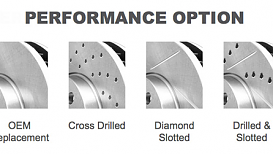
Brake rotors come in many different types. Before you can purchase a fresh set of brake rotors, you should understand each of these different types, what sets them apart, and what are the pros and cons of every style. The four kinds of brake rotors are: Blank or Smooth (OEM replacement- most vehicles) Cross-Drilled Diamond Slotted Drilled and Slotted Why Choose Blank Brake Rotors? Best for: Street, Autocross/Track, Towing/Hauling, Off-Road Pros: Far and away, most new cars come with blank rotors installed both for maximum effectiveness across driving conditions and for cost effectiveness. If you do not drive aggressively, have a luxury car, or seek a brake rotor that is quiet above all, smooth rotors can be the right choice for...

Members online

No members online now.

Members online

No members online now.

Trending content

Forum statistics

Threads
8,646
Posts
45,887
Members
4,578
Latest member
Dennis Donaldson
Back
Top