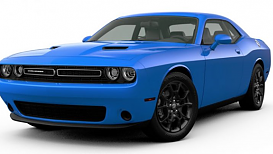
General Challenger

Tstats and Engine Temperature
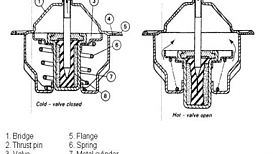
As we all know, the main purpose of a thermostat (tstat) is to maintain your Challenger’s engine at the ideal operating temperature and help produce fewer emissions. First, let’s talk about how a tstat functions and then why racers install low temperature ones. Basically, the thermostat starts at a closed position when you start the engine to help it reach operating temperature. While the engine is running, the coolant temperature slowly rises, making the thermostat begin to open. The opening allows warmer coolant in the engine to flow into the radiator. In turn, the water pump pushes lower-temperature coolant from the radiator into the engine. When the lower-temperature coolant reaches the thermostat, the warmer fluid begins to cool...
Tim Kuniskis- A Real Car Guy
Timothy (Tim) Kuniskis was named Dodge Brand and Interim Chrysler Brand Chief Executive Officer - Stellantis in January 2021. Prior to that, in June 2019, he was Head of Passenger Cars- North America in and Global Head of Alfa Romeo in February 2018. He has been a member of the Group Executive Council (GEC) since October 2015. In other words, he oversees the Alfa Romeo brand around the world while leading Chrysler and Dodge passenger car programs in the United States. Kuniskis has connected with enthusiasts far better than many automotive executives at his level. He attends events like Roadkill Nights in Detroit, the Modern Street Hemi Shootout events and the Woodward Dream Cruise, spending long periods of time signing autographs...
Types of Tires
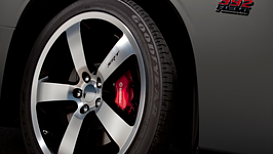
Tires come in many treads, sizes and performance characteristics. Here is a primer on the basic car tire categories and some popular consumer choices. Extreme Performance Summer Hyper-focused on extreme dry grip, but gives up wet traction, comfort and tread life to get it. Not to be driven in near-freezing temperatures, in snow or on ice, or at high speeds in deep standing water, these specially tuned tires combine big-block tread designs with aggressive tread compounds and reinforced internal constructions to emphasize dry road response, traction, handling and high speed capabilities for serious driving enthusiasts. A popular and highly recommended tire in this category is the Hankook Ventus R–S4. Max Performance Summer...
Hemi Heads
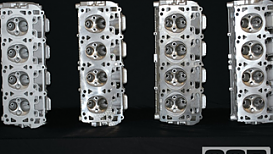
In recent years, Dodge has produced four different Hemi heads. Here is a brief description of each. In 2003, the 5.7 Hemi received the first, followed in 2005 by the 6.1 hemi design. In 2009 and 2011 respectively, the 5.7 Hemi Eagle and 6.4 Hemi Apache head appeared along with Variable Valve Timing (VVT) and the larger 392-inch engine. As the engines got larger, the heads improved with the help of larger valve sizes and improved ports. As cams got bigger, the beehive springs got more aggressive and capable of handling more lift. The current king is the Apache head that flows more than 340 cfm. 5.7 Hemi 2003–2008 The 5.7 hemi cylinder head can be found on Dodge trucks and non-SRT passenger cars, making it the most common head in...
Driving Dangerously in Motown- 1900-1930
The first gasoline-powered vehicle driven on the streets of Detroit was built by engineer Charles Brady King in 1896. It went as fast as 20 mph, which was described in the newspaper as "tearing along the street at a lively rate, dodging people and teams." The transition from the horse age to the motorized age would prove to be very dangerous. At first speeding vehicles were not a big problem, with only a few of them on Detroit streets, but the situation grew serious quickly. As early as 1908, auto accidents in Detroit were recognized as a menacing problem: In two months that summer, 31 people were killed in car crashes and so many were injured it went unrecorded. Soon thousands of cars jammed Detroit streets, driven by...
Modern Hemi Engines
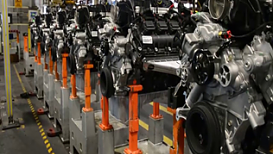
Modern Hemi production began in June 2002 at the Saltillo plant in Mexico. The first-generation 5.7 liter produced up to 350 horsepower at 5,600 rpm and 375 lb-ft of torque (4,400 rpm)- one horsepower per cubic inch- just like the legendary 426 Hemi. It was smaller, more powerful, and cheaper to build than the LA-series 360 V8 and the "Next Generation" 4.7 liter V8 it replaced, but produced more power and torque. It hooked up to the Mercedes 5-speed automatic, Chrysler's 5 and 6-speed truck transmissions and, later, the ZF 8-speed. 5.7 Hemi (345 cubic inches)- Eagle The 5.7 Hemi was released 17 years ago, for model year 2003, on the Dodge Ram1500, 2500, and 3500pick-up trucks to complement the Magnum 5.9 engine. The 5.7 Hemi in...

Windage Tray
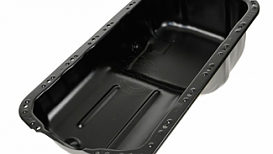
Most of us know about windage trays, but what is their function and what exactly is “windage?” Simply put, windage is a force created on an object by friction when there is relative movement between air and the object. Windage loss is the reduction in efficiency due to windage forces. As it pertains to internal combustion engines, windage is the power loss caused by the friction of the oil in the engine coming into non-lubrication contact with its internal moving parts. For the most part, this is oil splashing against the counterweights of the crank as it spins. If there is poor oil control inside a high performance engine, windage can cause a significant power loss. First, as rpm increases, the amount of power loss for a given amount...
Dick Landy- Mopar Drag Racing Pioneer
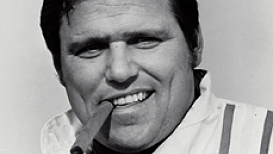
Dick Landy, a legendary drag racer and a major pioneer in Super Stock, Funny Car and Pro Stock, was also known for his innovative race cars and wild wheel stands. His nickname "Dandy Dick" came from his neat appearance in pressed white pants and jacket and long unlit cigar clenched between his teeth. Landy was among the drivers who popularized late-model Super Stock cars in the 1960s, campaigned the first Funny Cars in the middle of that decade and helped establish the popularity of Pro Stock when the category was created in 1970. Long identified with Chrysler and its parts division, Mopar, Landy came from the rural California car culture, where farm boys in modified pickups raced on deserted airstrips on weekends. As a freshman in...
100th Article!  Dodge Brothers
Few people are aware of the important role that John and Horace Dodge played in shaping Detroit’s early auto industry, and of the story of a dynamic partnership formed between two enterprising brothers who remained inseparable throughout their lives. John (right) and Horace Dodge HUMBLE BEGINNINGS Born into an industrious but poor family, Dodge brothers, John (born in 1864) and Horace (born in 1868), received their mechanical training from working in their father’s machine shop, in Niles, MI, that made internal combustion engines for marine use. The Dodge family moved from Niles to Battle Creek and then Port Huron before ending up in Detroit in 1886. MECHANICAL GENIUSES After their arrival in Detroit, the Dodge bothers quickly...
Safety Regulations/Equipment for Racing
If you plan to enter your vehicle in any competition sanctioned by the NHRA, your Challenger is going to have to pass a series of pre-race inspections for the required safety equipment. These requirements get more stringent as the expected horsepower and speeds increase.The SFI Foundation sets the standard for quality assurance in the vast majority of aftermarket and performance products. Basic Safety The basic safety stuff for the street legal classes is pretty simple. You’ve got to have working seat belts. If you’re installing a roll bar or cage, pay the extra money for a racing harness. Your headlights and taillights also have to be fully functional. The car’s battery must be properly secured. Your car also must have street...
Shock Absorbers
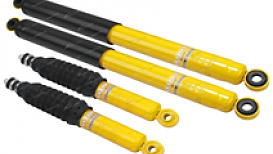
An automobile shock absorber is basically a hydraulic piston that absorbs and dissipates vibration using spring-loaded check valves and orifices to control the flow of oil. The first production hydraulic dampers, to act on the main leaf spring movement, were probably those based on an original 1908 concept by Maurice Houdaille. One design consideration, when designing or choosing a shock absorber, is where that energy will go. In most shock absorbers, energy is converted to heat inside the viscous fluid. In hydraulic cylinders, the hydraulic fluid heats up, while inair cylinders, the hot air is usually exhausted to the atmosphere. In other types of shock absorbers, such as electromagnetictypes, the dissipated energy can be stored and...
Limited Edition Challengers
Over the past 13 years, Dodge has employed a marketing strategy of releasing an array of limited edition models. Here is the staggering lineup. 2008 SRT8 The inaugural edition of the Challenger was numbered, X of 6,462, and came equipped with the 425 hp. 6.1 Hemi engine with 425 lb.-ft. of torque. It also featured an Auto Stick Automatic, 20-inch Alcoa forged aluminum wheels, 245/45-20 Goodyear tires, Brembo brakes, etc. Color choices were Hemi Orange, Brilliant Black Crystal and Bright Silver. In deference to the 2006 carbon fiber Challenger concept car, all SRTs had a vinyl “carbon-fiber” hood decal. In terms of performance, it ran a 0-60 time of 4.9 seconds, 13.0 seconds in the ¼ mile and 173 mph. top speed. SRT engineers also...
Axle Ratios
An axle ratio is the number of revolutions the output shaft or driveshaft needs to make in order to spin the axle one complete turn. The number is expressed in a ratio, which represents the number of teeth on the ring gear divided by the number of teeth on the pinion. For example, a vehicle with a 3.73:1 gear ratio means that the driveshaft will turn 3.73 times for each complete wheel spin. Many people simply refer to the axle ratio as 3.73, rather than express it as the ratio 3.73:1. However, they both mean the same thing. A lower (numerically higher) gear ratio provides more low-speed wheel torque, which makes it easier and faster to get the vehicle moving when accelerating, pulling a trailer or carrying a load of passengers and...
Car Salesman Tactics
When buying a new or used car from a dealership, there are many pitfalls you must avoid. It must be remembered, you and the dealership have different objectives. You are trying to buy your vehicle as cheap as possible and it is trying to maximize its profits. Here are some of the common sales tactics that unscrupulous dealers may use: 1. The Hard Sell Buying a car is a big decision, so never make a purchase simply because you feel pressure from an overaggressive salesman. 2. Selling on Payment Instead of Price When a salesman pops the question, “What kind of payment are you looking for? before you’ve even talked about the price of the car, that’s a major red flag. If you’re focused on payment, they will stretch the term as...
Intake Manifolds
An intake manifold is the part of an engine that supplies the fuel/air mixture to the cylinders. Its primary function is to evenly distribute the combustion mixture (or just air in a direct injection engine) to each intake port in the cylinder head(s). Even distribution is important to optimize the efficiency and performance of the engine. It may also serve as a mount for the carburetor, throttle body, fuel injectors and other components. The design and orientation of the intake manifold is a major factor in the volumetric efficiency of an engine. In some engines the intake runners are straight for minimal resistance. In most engines, however, the runners have curves, and some are very convoluted to achieve desired runner length. These...
Seat Belt Technology
A seat belt is a vehicle safety device designed to secure the driver or a passenger of a vehicle against harmful movement that may result during a collision or a sudden stop. A seat belt reduces the likelihood of death or serious injury in a traffic collision by reducing the force of secondary impacts with interior strike hazards, by keeping occupants positioned correctly for maximum effectiveness of the airbag (if equipped) and by preventing occupants being ejected from the vehicle in a crash or if the vehicle rolls over. History American car manufacturers Nash (in 1949) and Ford (in 1955) were the first to offer seat belts as options. The real breakthrough with modern seat belts came in 1958 when engineer Nils Bohlin invented the...
Line Lock
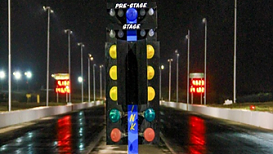
A line lock is a device that allows the front brakes to lock independently of the rear brakes, via a switch. The device is an electric solenoid that controls a valve which allows the brakes to be controlled individually. This allows the front brakes to be locked and the rear brakes to be open, and allows the driver to spin the rear wheels without wasting the rear brakes. This method is referred to as line lock and is popular among drag racers. Cars with manual transmissions allow drivers to control the amount of power transferred from the engine to the wheels by manipulating both clutch and throttle inputs. As a result, cars can accelerate quickly without losing traction. However, launching a vehicle requires simultaneous gas pedal...
Rear Window Louvers
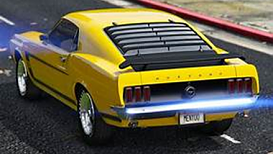
The rear window louvers that were original equipment on some 60s and 70s muscle cars were first and foremost, styling statements. They were part of an appearance package that was created to set these cars apart from lower performance plain Jane versions and were usually combined with features like stripes, spoilers and vinyl roofs. In addition, while they did not improve the aerodynamics of the vehicle, they created a dead air zone that helped traction by reducing rear lift. Some pony cars, like the 1969 Mustang Boss 302, had fastback roof lines with large rear windows so severely angled they were nearly horizontal. Although the rear window louvers were primarily styling features, they were designed to a specific length and angle to...
Engine Control Unit (ECU)
An engine control unit (ECU), also commonly called an engine control module (ECM), is the brain of your car. It is the main reason that we are now in the second era of muscle cars, despite restricting emission regulations. The ECU controls a series of actuators on an internal combustion engine to ensure optimal engine performance. It does this by reading values from a multitude of sensors within the engine bay, interpreting the data using multidimensional performance maps (called look-up tables), and adjusting the engine actuators. Before ECUs, air-fuel mixture, ignition timing, and idle speed were mechanically set and dynamically controlled by mechanical and pneumatic means. In the early 1970s, the Japanese electronics industry...
Leasing vs. Buying
How does the cost of leasing a Challenger compare to buying it, in terms of out-of-pocket costs? Or if you decide to buy a used Challenger, how much more will you save? And finally, what do those costs look like in the long run? These are important questions for buyers who want to carefully manage their automotive expenses over the years. It's hard to give one answer that covers all people and all situations. But the question can be divided into two parts: 1. An analysis of the hard costs of three different ways to get a Challenger- leasing, buying new and buying used. 2. A discussion of some intangible, non-monetary issues that might affect your decision. One Car, Three Financing Methods In the first analysis, you can look at an...

Members online

No members online now.

Members online

No members online now.

Trending content

Forum statistics

Threads
8,646
Posts
45,887
Members
4,578
Latest member
Dennis Donaldson
Back
Top