General Challenger

High Impact Paint
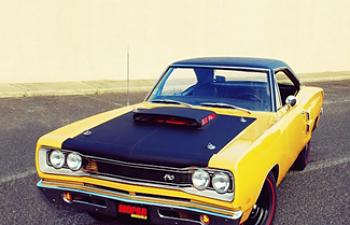
In the late 60s/early 70s, Dodge was already offering some of the hottest cars of the muscle car era- awesome machines like the Hemi Challenger and 440 Six-Pack Super Bee. Designers, however, decided to rev up the cars’ visuals to match, creating a far-out assortment of vibrant exterior paint colors. These special colors (a $15 option) generated a big buzz in the showrooms and launched an industry trend. The color palettes used by all the automakers were opened up, giving paint designers more creative freedom. Today’s brighter, bolder choices in exterior colors were directly influenced by Dodge’s High Impact Paint from the years 1969 to 1973. Cars that were originally painted with one of these colors have become very desirable among...
The Origin of Scat Pack
The Dodge Scat Pack was originally introduced in 1968 with the Charger R/T, Coronet R/T, Dart GTS, and Super Bee. In 1969, the Charger Daytona joined the Pack. In order for a car to enter the Scat Pack it had to be capable of running the quarter mile in the 14s (14.99 sec. or faster). Mainly a marketing term, Scat Pack cars got twin bumblebee stripes and special decals. It became legendary in the enthusiast community and symbolized one of the most feared groups of street machines every to rumble from stoplight to stoplight. In the early 1960s, Dodge had many exciting high performance cars, such as the 1963 Polara 426 Max Wedge, 1966 Coronet 426, 1967 Dart GTS 340, 1967 Charger R/T 383, etc. What was missing, however, was a way to...
Forged vs. Cast Wheels
When choosing aftermarket wheels for your Challenger, there is a considerable amount of choice. Car wheel technology has evolved considerably, over the years, from steel- once the preferred material- to lighter weight aluminum alloys. Among all types, you have the option of choosing between forged and cast wheels. In discussing the difference between the two, it is important to distinguish between the advantages and disadvantages of forging and casting. The strength of any metallic product is not only dependent on what it is made of, but is also dependent on how the raw metal is treated. Its internal crystal structure ultimately decides its strength and other characteristics, and this is influenced by the way in which the raw metal...
Evolution of Racing Stripes
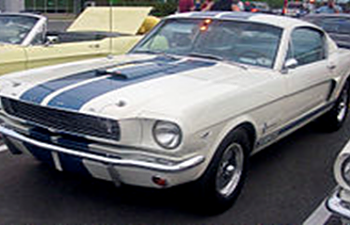
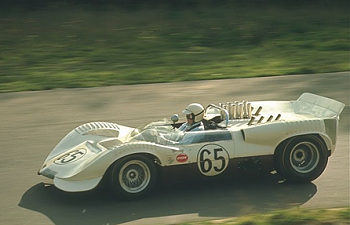
Racing stripes are usually a “must have” for owners of muscle cars. These stripes, originally called “go faster stripes,” first appeared on Cunningham race cars in 1951. Two parallel blue stripes ran from front to rear in the center of the white car body. Their main purpose was to help spectators identify the cars during races. They evolved from the traditional FIA registered U.S. Racing color of a white body and blue chassis, which dated from when racing cars had the chassis exposed. The two blue stripes were a symbolic echo of the chassis colors. In 1964, the Shelby Daytona Coupe used the converse- blue with white stripes- and would compete in the 1964 and 1965 24-hours of LeMans. Racing stripes, usually black or white in color...
Evolution of Rear Spoilers
A car spoiler is a stylish automobile accessory that can be mounted on the rear of most cars. There are many different styles of spoilers. The general shape consists of a slender slightly downward angled piece of metal, fiberglass, silicone or carbon fiber that is usually the width of the vehicle. Some seem to appear to mold into the vehicle and others stick out with two small ledges on both sides. The term "spoiler" is often mistakenly used interchangeably with "wing." An automotive wing is a device whose intended design is to generate downforce as air passes around it, not simply disrupt, or “spoil” unfavorable airflow patterns. As such, rather than decreasing drag, automotive wings actually increase drag. However, for the sake of...
Evolution of Hood Scoops
Back in middle school science class, we learned that in order to make fire, you need three ingredients: fuel, ignition and air- or, more specifically, oxygen. You’ll also remember that cold air is denser than hot air, putting more oxygen in the same amount of volume. While the modern internal combustion engine does a fine job of delivering fuel and ignition, that cold air part becomes tricky as you try to route fresh air from outside through a hot engine compartment. In response, in the late 1960s/early 1970s a fantastic variety of air scoops, in every shape, size and composition appeared on muscle cars- NACA ducts, single and dual ram air intakes and cowl-induction hoods. Engineers realized that, to be effective, a hood scoop must be...
Hood Pins
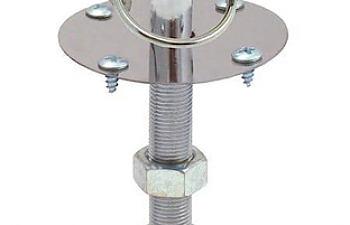
Hood pins are used as a secondary restraint for the hood and are attached by a pin and plate drilled through the hood. They were originally made for the racetrack to keep hoods buttoned down at high speeds, but found their way onto muscle cars of the late 60s/early 70s. Hood pins (two per hood) were most prevalent on Dodge and Plymouth muscle cars of that era (e.g., Challengers, ‘Cudas, Road Runners, Daytonas, GTXs, Super Bees, etc.). They were, primarily, a styling element used to give a more aggressive look, since today’s cars already have a safety hood latch. One car, the 1969 Dodge Super Bee 440 Six-Pack, had four hood pins. This, however, was necessary because it had a lift-off fiberglass hood with no hood hinges. Now, owners...

Challenger- Concept to Production
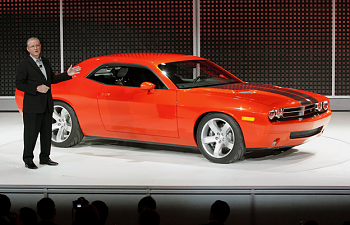
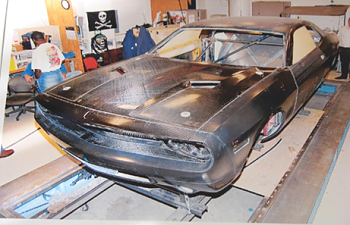
The planning and design of the Challenger concept car started in 2004. At that time, Chrysler’s Pacifica Studo was given the assignment to work with the exiting LX platform (i.e., Charger, Chrysler 300 and Magnum) to develop a 2-door, rear-wheel drive concept car. Many of the designers were musclecar guys and a new Challenger was proposed to be built around the 6.1 Hemi engine. There was a lot of conversation as to how much retro design features should be built into the car. Based on a competition, three versions were developed. Two were initially approved by senior management, although neither was a retro design. However, after receiving input from Charger buyers, the Challenger design, as we know it today, was approved. The chief...
Ralph Gilles- A Real Mopar Guy
Mopar enthusiasts owe the fantastic array of performance models to Ralph Gilles, Head of Design for Fiat Chrysler Automobiles. We are truly fortunate to have a cool car guy in charge. Gilles, as a boy living in Quebec, was drawing concept vehicles at the age of eight. When he was fourteen years old, his aunt sent one of his sketches to Chrysler Chairman Lee Iacocca. A reply came from K. Neil Walling, Chrysler's design chief at the time, suggesting he attend one of three design schools. Following this advice, he attended the College of Creative Studies in Detroit, MI, and in 2002 received an Executive MBA from Michigan State University. After graduation, in 1992, he joined Chrysler Corporation’s Design Office. Recognizing his...
The Meaning of "Mopar"
Short for the Chrysler Motor Parts Corporation, Mopar made its first appearance in the late 1920s and became its own brand in 1937. The name Mopar was created by a committee to market cans of "Chrysler Motor Parts" antifreeze. From there, the Mopar catalog expanded to include waxes, cleaners, filters, engine parts and more. Now, in its 85th year, Mopar encompasses the full line of Fiat Chrysler Automobiles parts, accessories, and customer service, including Fiat and Alfa Romeo brands along with Chrysler, Dodge and Ram trucks. Mopar parts, identified by the iconic big blue M, are original equipment (OEM) manufactured parts for FCA US LLC vehicles. The term "Mopar" has passed into broader usage among car enthusiasts as a reference...
World's Fastest Hellcat
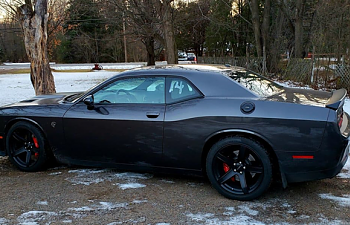
When Dodge introduced the Challenger Hellcat back in 2014, it claimed that in stock form with the automatic transmission, it could cover the quarter mile in just 11.2 seconds. With drag radial tires, the time could be reduced down to the 10.80s The first Hellcat owner to break into the 10-second range was Jay Gustafson, who ran a 10.997 a few years back, making his Challenger the quickest stock Hellcat car in the world, but Canadian racer Jim Benko recently ran a 10.937, on November 11, 2018, breaking Gustafson’s record and becoming the quickest and fastest stock Hellcat in the quarter mile in the world. Benko, who lives just outside of Montreal, has spent the last year gradually lowering his track times and when he broke an...
Ronnie Sox- A Tribute to "Mr. Four Speed"
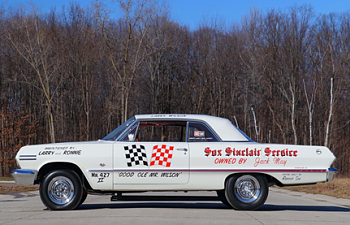
Ronnie Sox is one of the greatest Mopar drag racers. Like many who eventually became professional racers, "The Boss," grew up around cars, raised in the shadow of his family’s Sinclair service station. As soon as he was old enough to drive, Sox began competing in drag races, sponsored by the Police Club of Burlington, NC, at a local airport. In the early days, Sox didn’t even own a car and used his father’s 1949 Olds. From these humble beginnings, Sox would go on to become what many describe as the best 4-speed driver that ever lived. From the mid-1960s though the mid-1970s, the team of Sox and Martin were usually the ones to beat in Super Stock or Pro Stock. Sox was the winningest driver of all time in Pro Stock. Buddy Martin first...
Slicks & Drag Radials
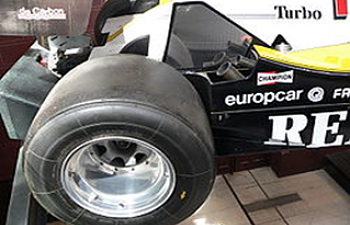
Drag radial street-legal tires had their origin in racing. Originally, race cars used “racing slicks”- a type of tire with a smooth tread. The first production "slicks” were developed by M&H Tires in the early 1950s for use in contact patch to the track and maximized traction for any given tire dimension. Slicks were also used on road and oval track racing where steering and braking require maximum traction from each wheel. Slicks, however, are not suitable for use on street cars which must be able to operate in all weather conditions. They are used in auto racing where competitors can choose different tires based on the weather conditions and can often change them during a race. Wet roads severely diminish the traction because of...
Why Do Hemi Engines Have Dual Sparkplugs?
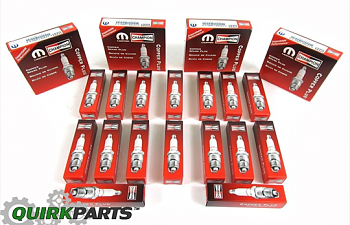
Each cylinder on a Hemi engine has an ignition coil pack over one spark plug, and a regular plug wire connected to the other spark plug. Further, the coil pack also has a plug wire attached to it that extends to the opposite cylinder bank. Each cylinder shares a coil pack with another cylinder. Each of the two plugs on a given cylinder is fired by a separate coil. One plug has a coil directly attached, and the other is fired via an ignition wire connected to a coil located on another cylinder on the opposite bank. The benefits would be one-half the number of coils (8 vs. 16) compared to each plug having its own coil, and of course less weight. The extra plug fires during the power stroke to more fully burn the hydrocarbons. The second...
History of SRT
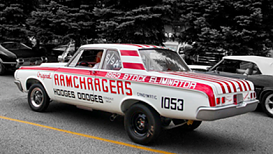
Performance vehicles are a Chrysler tradition. In the 1950s, an elite team of Chrysler engineers set out to extract extreme horsepower from existing engines. The team created new manifolds featuring long-tube intake runners. The innovative design helped engines ingest more air, translating into improved performance. The new induction system was called “Ramcharger,” and the team behind the technology adopted that name. The Ramchargers’ new engine produced enormous amounts of power, leading to success on the drag strip during the 1960s and 1970s. Fast forward to the 1989 North American International Auto Show in Detroit, where Dodge amazed crowds with its sleek Viper concept. The project, initiated by then-company president Bob...

Members online

No members online now.

Members online

No members online now.

Trending content

Forum statistics

Threads
8,646
Posts
45,887
Members
4,578
Latest member
Dennis Donaldson
Back
Top