General Challenger

Entertainment Systems- from AM Radio to Bluetooth
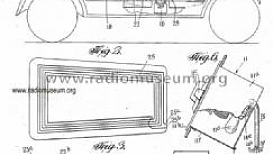
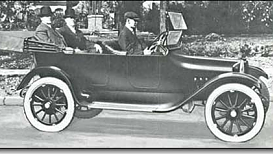
Over the past 97 years, “entertainment systems” in cars have evolved from primitive 6-volt dry-cell AM radios to high-tech Bluetooth units. It is interesting to take a look back to see how technology has changed over the years. Here is a brief, illustrated chronology of these devices: 1922: First radio in a Car The first radio (“Marconiphone”) appeared in a Daimler car at the Olympia Motorshow in England. 1927: First Radio in Mass-Produced Car The “Transitone” radio appeared in a mass-produced car. 1930: First Commercially Successful Radio The Galvin brothers’ expensive $130 unit (a Model A Deluxe coupe cost $540) was the first commercially successful car radio, and the first product to wear the Motorola name. 1952: First FM...
How Do Navigation Systems Work?
Getting lost while driving, or stopping at a gas station to ask for directions, has become a thing of the past. With GPS in your car’s navigation system, in the portable navigation device on your dashboard, or in your smartphone, it is easy to pull up a map and see where you are, or get directions to where you are going. GPS makes you safer, routes you around traffic delays and helps you find nearby services. GPS (Global Positioning System), a technology we now take for granted, started life as a military-first radio-navigation system meant to increase the accuracy of aircraft, submarines and their ordnance. The first satellite went up in 1978 and the system became fully operational in 1995. Civilian use, however, was not allowed...

A new car dealer has a 2017 Mopar edition that was never sold. Less than 50 miles. Sticker was 63,000 reduced to 50,000. Question I have what is the better choice. A 392 scat pack or the Mopar edition? Seems the Mopar edition is around Hellcat price. I have a 14 Mopar edition, don't see many for sale. Depends on what I can get. Thanks
Drag Racing Classes
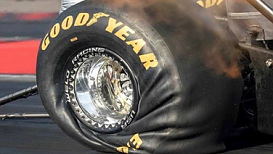
The NHRA has a huge variety of categories and eliminators. Class eligibility is based on requirements that include type of vehicle, engine size, vehicle weight, allowable modifications and aerodynamics. Top Fuel, Funny Car, Pro Stock, Top Alcohol Dragster, Top Alcohol Funny Car, Super Comp, Super Gas, Super Street and Pro Mod feature a single class of vehicle in heads-up competition. Comp, Super Stock, and Stock are made up of a variety of classes equalized by a handicap starting system. Top Dragster and Top Sportsman feature a single class of vehicle in bracket-style competition. Top Fuel Top Fuel Dragsters are the quickest accelerating race cars in the world. The fastest competitors reach speeds of 335 miles per hour in only 3.64...
History and Applications of Carbon Fiber
Carbon Fiber is a polymer and is sometimes known as graphite fiber. It is a very strong material that is also very lightweight. Although carbon fiber is five times stronger and twice as stiff as steel, it is lighter than steel; making it the ideal manufacturing material for many parts. These are just a few reasons why carbon fiber is favored by engineers and designers for manufacturing. Carbon fiber dates back to 1879, when Thomas Edison baked cotton threads or bamboo silvers at high temperatures, which carbonized them into an all-carbon fiber filament. By 1958, high-performance carbon fibers were invented just outside of Cleveland, Ohio. Although they were inefficient, these fibers contained around 20% carbon and had low strength and...
Limited Slip Differentials
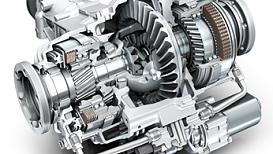
A limited-slip differential (LSD), or “anti-spin” differential is a type of differential that allows the rear wheels on a vehicle to turn at different speeds when executing a turn. They are widely used in high performance and four-wheel-drive vehicles because they provide superior traction abilities. Various types of differentials can be classified as "anti-spin." These include limited slip, locking and spool differentials. Each performs differently on and off the road. Generally, only limited slip differentials are installed in factory vehicles. A locking or spool-type differential is used for off-road or racing use. The advantages of an LSD in high-performance automobiles were first demonstrated during the original muscle-car era...
Factory Paint Process
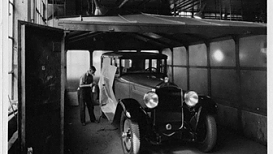
In the early days of the automobile industry, painting was a slow process. It was applied manually and dried for weeks at room temperature by solvent evaporation. 1930 Packard Factory As mass production of cars made the process untenable, paint began to be dried in ovens. Nowadays, two-component (catalyzed) paint is usually applied by robotic arms and cures in just a few hours either at room temperature or in heated booths. (Note- That is why car paint can be waxed as soon as the new owner takes delivery). Robotic Paint Sprayers Until several decades ago lead, chromium and other heavy metals were used in automotive paint. Environmental laws have prohibited this, which has resulted in a move to water-based paints. Up to 85% of...
The Right Size Wheel for Your Tire
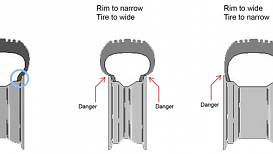
It is important to ensure your vehicle is installed with a properly sized tire. Each tire size is designed to fit a specific rim width. The correct rim width allows the tire sidewall to flex where the designers meant for the flex to occur. There is a wide range of tires that will fit a specific rim width. After you know what size range of tire will fit your wheels, you can pick a size based on aspect ratio and height of the different tire sizes. A rim that is too narrow in relation to the tire width will allow the tire to distort excessively sideways under fast cornering. As most of you know, tire stretching is not a good idea. If you're not familiar with the procedure, it involves stretching a tire beyond the recommended rim width...
Ignition Coils
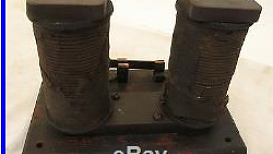
An ignition coil (also called a spark coil) is an induction coil in an automobile's ignition system. It transforms the battery's low voltage to the thousands of volts needed to create an electric spark in the spark plugs to ignite the fuel. Early gasoline internal combustion engines used a magneto ignition system, since vehicles did not have batteries. The voltage produced by a magneto was dependent on the speed of the engine, making starting difficult. A battery-operated coil, however, can provide a high-voltage spark, even at low speeds, making starting easier. When batteries became common in automobiles for cranking and lighting, the ignition coil system displaced the magneto ignition. Model T Ford Magneto (1908-1927) Model T...
Mufflers
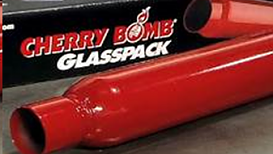
Since the beginning of hot rodding, enthusiasts have tinkered with their car’s exhaust system, particularly the mufflers, to get the “right sound.” A muffler’s job sounds easy enough- reduce exhaust volume to tolerable levels while allowing the sweet sounds of your ride to waft through the air. But this becomes a monumental task as horsepower increases. Engines build horsepower by pushing spent exhaust out of the tailpipe as fast as possible. As pistons furiously churn, exhaust velocity increases, making your ride louder. The difficult function of performance mufflers is to keep noise where you want it, produce great sound and add horsepower. In the golden age of muscle cars (i.e., late 1960s/early 1970s), the most popular and least...
Exhaust Headers
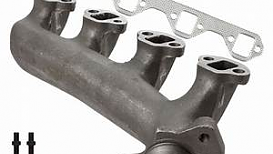
A component of any car or truck engine is an exhaust manifold for each bank of cylinders .In most production engines, the manifold is a cast iron assembly designed to collect the exhaust gas from two or more cylinders into one pipe. Engineers like cast iron because of its heat management properties and its superior longevity over any other type of exhaust outlet design. They also use the least metal, occupy less space and have the lowest production cost. Although these design restrictions are cost effective, they are not the most efficient choice for venting gases from the engine. Inefficiencies generally occur due to the nature of the combustion engine and its cylinders. Since cylinders fire at different times, exhaust leaves them...
Mopar Automatic Transmissions
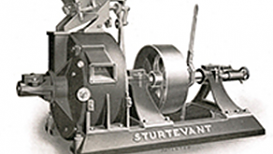
Modern automatic transmissions can trace their origins to a gearbox that was developed in 1904 by the Sturtevant brothers. This unit had two forward speeds, the ratio change being brought about by flyweights that were driven by the engine. At higher engine speeds, high gear was engaged. As the vehicle slowed down and engine rpm decreased, the gearbox would shift back to low. One of the key developments in arriving at an automatic transmission was the use of planetary transmission in the vehicle's gearbox. Probably the first use of which was in the Wilson-Pilcher made between 1900 and 1907. In 1934, both REO and General Motors developed semi-automatic transmissions that were less difficult to operate than a fully manual unit. These...
"Grandfather" of the 2018 Dodge Demon
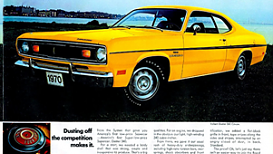
Did you know that the controversial Dodge Demon name goes back 50 years? In 1970, the restyled Plymouth Valiant, named the Duster, was a massive success. Dodge immediately insisted on getting its own version. That car became the 1971 Dodge Demon. 1970 Plymouth Duster 340 Both the A-body Plymouth Duster and Dodge Demon were fantastic cars for the money (starting just over $2,100). The two cars were virtually identical, underneath. The attractive-looking Demon came with four optional engines (198- 125 hp./180 lb./ft.; 225- 145 hp./215 lb./ft.; 318- 230 hp./320 lb./ft.; and 340- 275 hp./340 lb./ft.). It had racing mirrors, 14 inch tires, racing stripes, “Tuff” steering wheel, plaid bench seats, flat-black hood treatment, Rallye...
Drag Racing Primer- Tips with Street Tires
Here are some drag racing tips to make your trip to the drag strip safe and successful. Before you arrive at track Remove the floor mats, child seats (if applicable) and other non-essential cargo. Every bit of weight you remove can help. Try to plan so you have about ¼ tank of fuel when you arrive. Extra fuel adds weight and you won’t need more than ¼ tank. Don’t show up with your tank on empty. The fuel is usually expensive at the track and you don’t want to be “running on fumes.” Bring a drag racing helmet and wear long pants. Many tracks will not let you race unless you are wearing them. A helmet is generally required for any car that runs faster than 14.0 or over 100 mph in the ¼ mile. (Note- Helmuts meeting Snell SA2015...
Development & Evolution of the Hemi Engine
Alan R. Welch and his brothers, owners of the Welch Motor Car Company, are credited for pioneering the first hemispherical engine. The power plant was a simple 20-horsepower, 2-cylinder engine with a single overhead camshaft. Although the General Motors discontinued the HEMI in 1910 when it bought Welch, Peugeot developed its own hemispherical engine. BMW mass-produced a HEMI version before Chrysler engineered it for modern use. Three generations of Hemi engines have been built by Chrysler for automobiles: the first (known as the Chrysler FirePower) from 1951 to 1958, the second from 1964 to 1971, and the third beginning in 2003. Although Chrysler is most identified with the use of "Hemi" as a marketing term, many other auto...
History of the Dodge Logo
Dodge was founded in 1900 by Horace and John Dodge (The Dodge Brothers). It was initially known as the Dodge Brothers Company and used to sell bicycles, but then within two years it became a major supplier of axles, engines, and transmissions to the automobile industry. The company started by producing chassis and engines for the Ford Motor Company and Olds Motor Vehicle Company. However, with the stress and demands of the booming automobile industry, the brothers decided to tinker with the idea of manufacturing their own line of cars because they were ‘tired of being carried around in Henry Ford’s vest pocket.’ Therefore, after years of building cars for the Ford Motor Company, the Dodge brothers worked on building their own company...
Dim to Bright- Headlight Technology
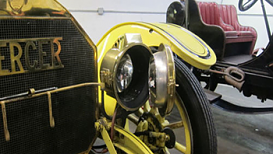
From its humble origins, the headlight has evolved from what was considered an accessory of the 1900s to a necessity safety feature (half of all deadly accidents occur at night). Since its first generation, headlights have traveled a long way from a simple flame to a high-tech laser. Carbide Headlights The first vehicle headlamps were officially introduced during the 1880s and were based on acetylene and oil, similar to the old gas lamps. Originally developed for mining purposes, Carbide lamps were produced by dripping water on calcium carbide to produce acetylene gas, which was then burned for a light. These headlights or ‘headlamps’ required regular cleaning because they produced caustic lime, a toxic substance. Its construction...
Nitrous Oxide
Juice. Squeeze. Laughing gas. Nitrous oxide has many aliases. It can inject a healthy dose of horsepower into an engine, via direct port, carburetor/throttle body plate, air intake tube or, air cleaner injection, to give a race car the winning edge at the track. In racing, nitrous oxide (often referred to as just "nitrous") allows an engine to burn more fuel by providing more oxygen than air alone, resulting in a more powerful combustion. The gas is not flammable at a low pressure/temperature, but it delivers more oxygen than atmospheric air by breaking down at elevated temperatures. Therefore, it often is mixed with another fuel that is easier to deflagrate. Nitrous oxide is a strong oxidant, roughly equivalent to hydrogen peroxide...
Paddle shifters
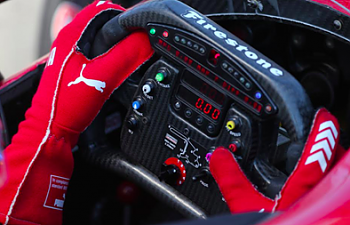
Paddle shifters, once exclusive to race cars and exotic sports cars, like the Ferrari F430, are now becoming commonplace on performance cars with automatic transmissions. This is because manual transmissions are going away faster than the landline telephone. Critics of automatics say that they take the passion and command out of driving. Paddle shifters, however, bring some of that joy and control back by allowing drivers to manually shift an automatic transmission with steering-wheel or steering-column-mounted levers. Normally with an automatic transmission, whether it’s a traditional hydraulic unit, a dual-clutch system, or a continuously variable transmission (CVT), the computer chooses the appropriate gear changes for the...

Members online

No members online now.

Members online

No members online now.

Trending content

Forum statistics

Threads
8,646
Posts
45,887
Members
4,578
Latest member
Dennis Donaldson
Back
Top